
Begin
Welcoming entry points for different ages, backgrounds and confidence levels.
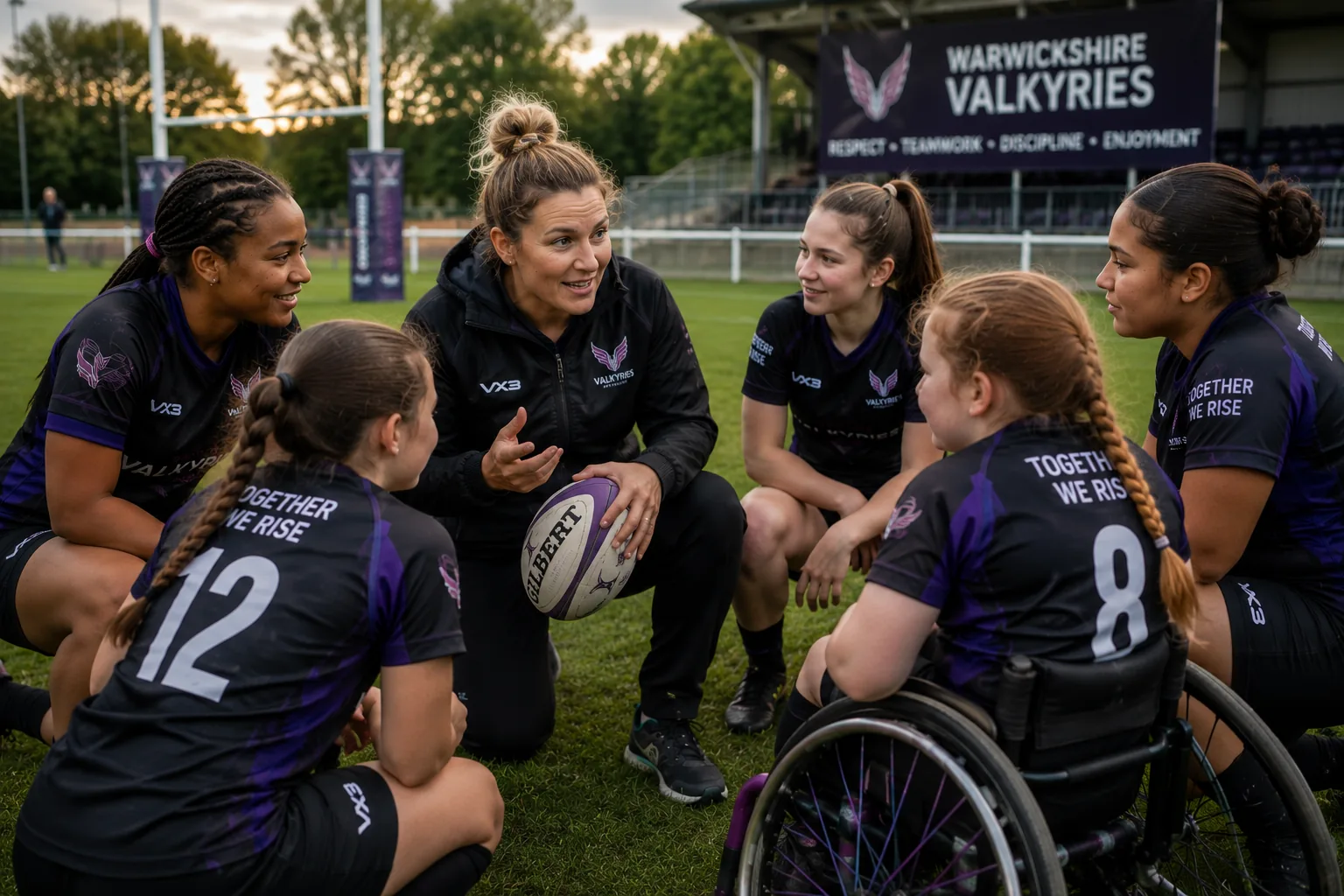
A connected pathway from first experience to performance, leadership, education and lifelong involvement.
The aim is not simply to increase participation. It is to make staying, progressing and leading feel possible.
Welcoming entry points for different ages, backgrounds and confidence levels.
Coaching, wellbeing and skills that support the whole person.
Clear routes into performance, volunteering, leadership, education and careers.
A connected journey should make the next step visible at every stage.
A positive, welcoming introduction to sport.
Regular activity with the right level of challenge and support.
Coaching, confidence and skills that build over time.
Opportunities to test progress in the right environment.
A credible pathway for those who want to pursue higher performance.
Visible routes into coaching, volunteering, leadership and decision-making.
Keep people connected to sport through work, community and lifelong participation.
women and girls in sport Warwickshire — need more than visibility: they need welcoming places to start, reasons to stay, credible routes to progress and opportunities to lead. Warwickshire Valkyries Foundation is being shaped around that whole experience.
A first session can determine whether somebody feels that sport is for them. Clear information, appropriate facilities, welcoming coaching and an environment free from unnecessary uncertainty can make participation easier. Schools, clubs and community organisations can also help reach girls and women who may not already identify with organised sport.
Participation can change because of education, employment, caring responsibilities, confidence, injury, cost and life transitions. A female-first system should understand those pressures and create flexible ways to remain connected. Retention is not simply about keeping people in one team; it can mean helping them move into another role or level of involvement.
Community participation and performance ambition can coexist. Those who want to progress should be able to see high-quality coaching, strength and conditioning, recovery, analysis and competition pathways, while recreational participants should feel equally valued. A strong system makes room for different ambitions without creating an artificial divide.
Representation away from the field matters too. Coaching, officiating, governance, media, operations, commercial work and leadership all shape sporting culture. Creating visible opportunities for women across those roles can improve decision-making and provide role models for younger participants.
The Foundation does not need to own every activity. Effective partnership can connect existing clubs, governing bodies, schools, universities, community groups and specialist organisations. The objective is to add capacity and create clearer pathways where there are genuine gaps.
Once programmes are operating, the Foundation intends to look beyond headline attendance. Useful measures can include repeat participation, retention, progression, volunteering, qualifications, leadership opportunities, participant experience and the breadth of communities reached.
The developing model focuses on welcoming participation, retention, progression, leadership and facilities designed with women and girls in mind.
The vision includes accessible first experiences as well as development opportunities. Individual programmes will publish their own eligibility and booking information when available.
Partnership with existing clubs and organisations is central to the approach. The intention is to strengthen local provision rather than duplicate effective work.
Operational programmes should be measured using participation, retention, progression, experience and wider community outcomes, with evidence published as the project develops.